Laboratory of Neurogenetics and Behavior

Research in the Vosshall Lab

The overall goal of work in our laboratory is to understand how the brain interprets olfactory signals in the environment that signal food, danger, or potential mating partners. Our work is largely carried out in the genetically tractable animal, Drosophila melanogaster, which displays a rich repertoire of chemosensory behaviors despite having a nervous system with only 105 neurons. We have recently expanded our research focus to host-seeking behavior in the malaria mosquito Anopheles gambiae and a genetic study of specific anosmias in humans. The long-term goal of our work is to understand how higher olfactory centers process different odor stimuli to yield a conscious percept of a particular smell.

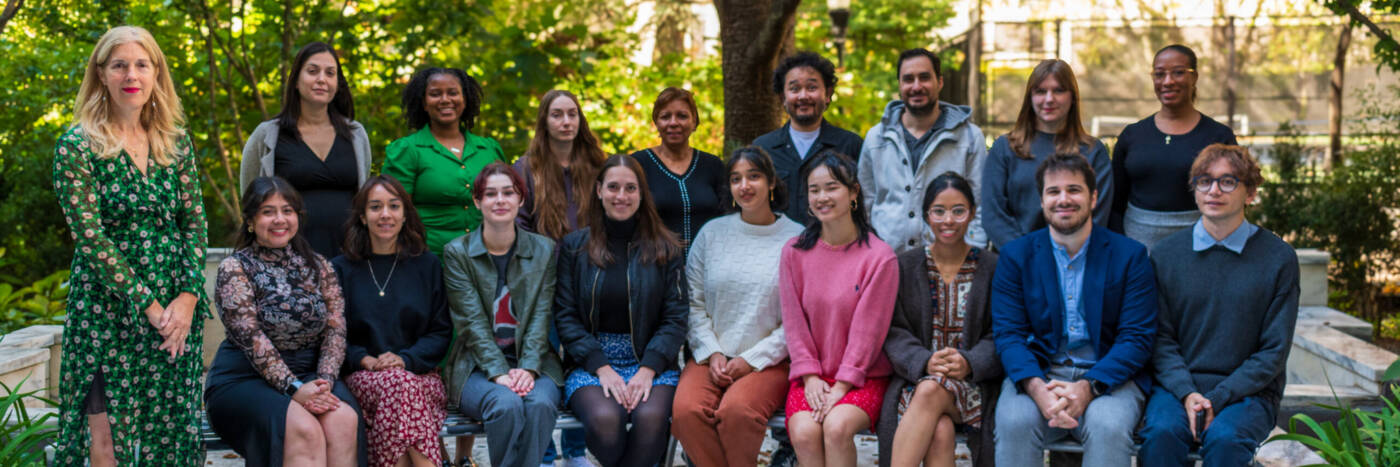
Photo: Vosshall Lab July 2007
Left to right: Back row: Andreas Keller, Matthieu Louis, Maurizio Pellegrinog, Johannes Larsch, Mathias Ditzen, Mike Crickmore. Middle row: Richard Benton, Ariadna Amador, Takao Nakagawa, Pearl Rivkin, Kenta Asahina, Barbara Ghelardi, Natasha Novikov, Gabriel Gasque. Bottom Row: Erika von Heijne, Mimi Russler, Shelli Farhadian, Leslie Vosshall, Alison Hill, Jennifer Mehren, Rachel David. Not pictured: Peggy Hempstead, Iran Gomez.
Photo credit: Ilya Podobedov, Rockefeller University.

Current Projects

Fly pheromone perception
Eleonore Real, Ph.D.
Michael Crickmore, Ph.D.
with Alison Hill


click to enlarge

In previous work, we identified four candidate pheromone receptors, based on their connectivity to brain regions that are sexually dimorphic and necessary for male courtship behaviors. Volatile sex pheromones have not been described in Drosophila and the identification of putative pheromone receptors opens up the possibility of studying this fascinating problem in a genetically tractable organism. We are characterizing candidate ligands for these receptors and using a genetic approach to measure the contributions of these chemosensory circuits to fly courtship and copulation behavior.

Molecular biology of the insect odorant receptors
Maurizio Pellegrino
Takao Nakagawa, Ph.D.
with Pearl Rivkin


click to enlarge

One member of the odorant receptor gene family, Or83b, has the unique property that it is expressed in nearly all olfactory neurons. Therefore, each olfactory neuron in the fly is likely to express a conventional odorant receptor along with the co-receptor Or83b.

Our recent work has shown that the insect odorant receptor is a heteromeric complex of the OR83b co-receptor with a conventional ligand binding odorant receptor. OR83b is necessary and sufficient to target this OR/OR83b complex to the ciliated dendrite of the olfactory sensory neuron. The fundamental question my group is currently addressing is whether Or83b has additional signaling functions beyond its role in ciliary trafficking. We are using both forward genetic screens and bioinformatic approaches to identify genes that are necessary for olfactory function in Drosophila. Further, we are carrying out a large-scale structure-function analysis of OR83b and the conventional odorant receptors in heterologous expression systems. The goal is to map those domains that are necessary for the heteromeric association of the OR/OR83b complex, domains necessary for trafficking, and residues that are necessary for odor signal transduction. Going beyond conventional genetics, we plan to use chemical biology to probe for small molecules that interfere with heterodimerization, trafficking, or signaling of OR/OR83b complexes. Some of these compounds may be useful elements in a chemical strategy to block olfactory host-seeking behaviors in mosquitoes and other pest insects. These compounds may act as insect repellents that could be useful to control insect vectors that transmit human infectious diseases.

Genetic analysis of olfactory coding in Drosophila larvae

Kenta Asahina
with Silvia Piccinotti

At an earlier developmental stage, Drosophila larvae display simple and robust olfactory-mediated chemotactic behavior controlled by 21 olfactory neurons expressing a repertoire of 25 odorant receptor genes. We have used a genetic approach to study odor coding in this simple animal by ablating specific sensory neurons and the receptors expressed in them, or by constructing animals with only a single functional olfactory neuron. By combining behavioral analysis with calcium imaging, we are attempting to understand the neural basis of olfactory behavior in this animal.

Genetic basis of specific anosmias in humans

Andreas Keller, Ph.D.
with Peggy Hempstead and Iran Gomez

As part of our overall mission to understand odor coding, we have initiated psychophysical studies in humans to test the hypothesis that specific mutations in the odorant receptor genes underlie the well-described inter-individual differences in odor perception. Toward this end, we are conducting a large out-patient study in The Rockefeller University Hospital to screen 400 normal human volunteers for those unable to smell certain odors while having an otherwise normal sense of smell. The goal is to identify odorant receptor genes that underlie these specific anosmias.

Regulation of blood-feeding behavior in the malaria mosquito Anopheles gambiae

Shelli Farhadian

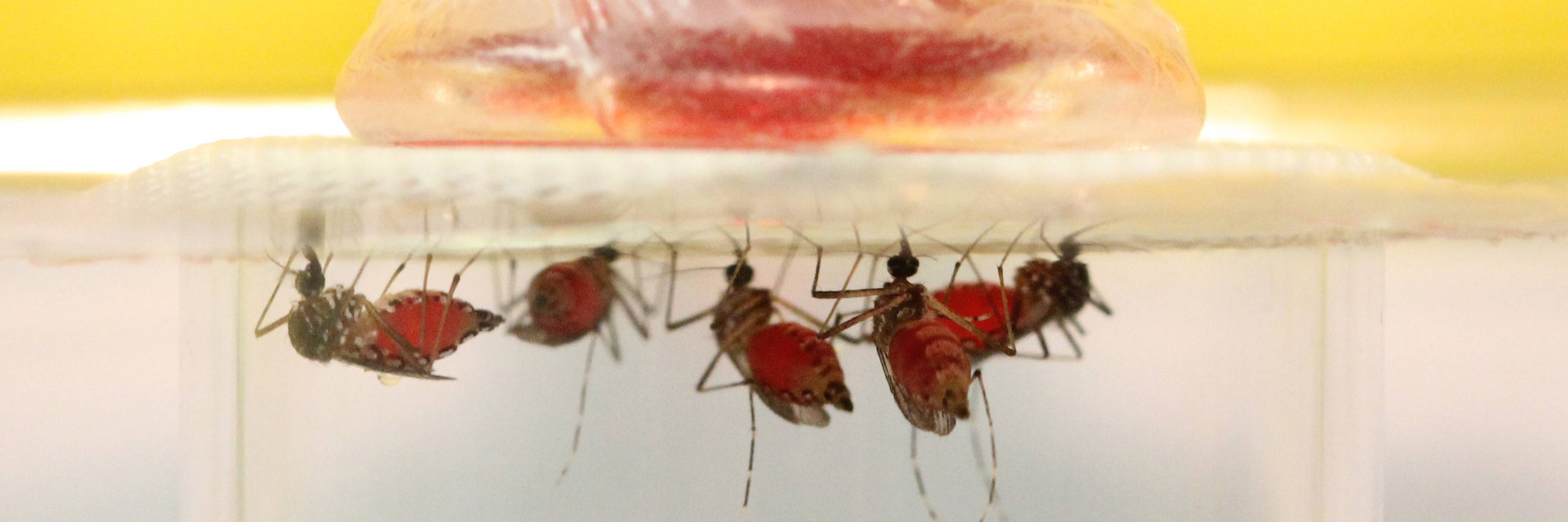
Olfactory cues guide mosquitoes toward humans, from which the mosquitoes derive the blood they need to complete ovarian development. In the malaria mosquito, Anopheles gambiae, host-seeking is suppressed or inhibited for about 72 hours after the mosquito takes a blood meal. The molecular basis for this behavior remains unknown, but may be explained by a humoral control mechanism in which the sensitivity of the olfactory system is altered following blood-feeding. In this project, we are examining the hypothesis that regulation of specific olfactory genes modifies the host-seeking behavior of female Anopheles gambiae after blood-feeding.

Regulation of cellular and neuronal function by the Drosophila Ih channel

Gabriel Gasque, Ph.D.

Rhythmic cellular functions, such as the heartbeat and the timing of daily rhythms of activity and sleep, are regulated by the activity of cellular pacemakers. We are using genetic approaches to study the role of the Drosophila hyperpolarization- and cyclic nucleotide-gated ion channel, DmIh, in these processes.


Site Meter